
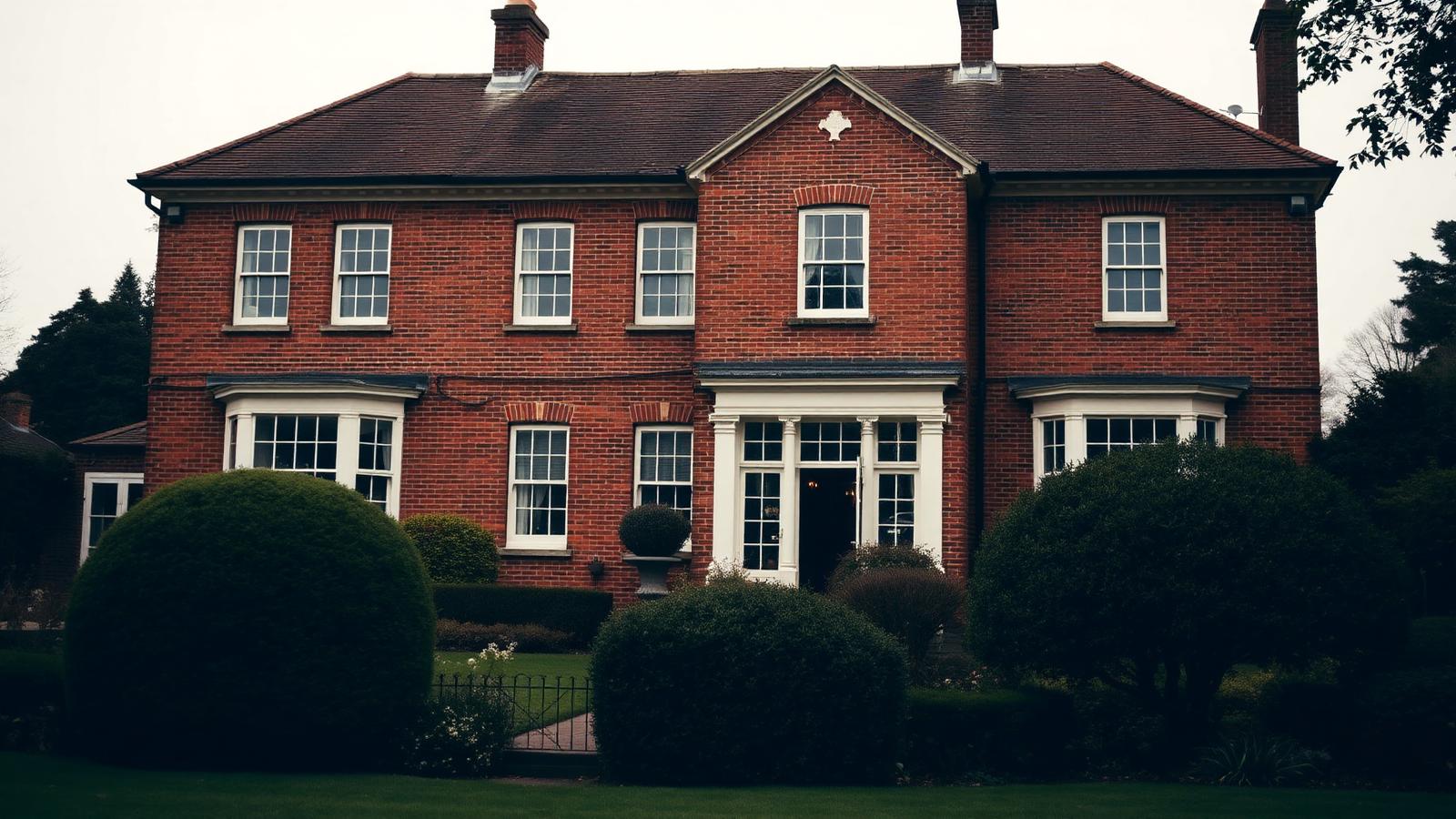
Bisiker v Bisiker [2026] EWHC 2070 (Ch) provides another stark illustration of the financial and personal risks of allowing disputes over family property, trusts and inheritance to proceed all the way to trial.
A family home. Five adult siblings. A property worth several million pounds. An arrangement dating back more than 40 years. And, ultimately, a High Court trial to determine who actually owned it.
The dispute in Lindsay Bisiker v Judith Ann Bisiker & Ors [2026] EWHC 2070 (Ch), recently reported in the Daily Mail, is an unusually vivid example of a problem which frequently arises in property and land and probate and inheritance litigation: what happens when the legal documents say one thing, but members of a family say that something quite different was always understood?
The dispute over Moonhills
The case concerned Moonhills, a substantial property near Beaulieu in the New Forest.
It was purchased in 1984 using money provided by the parties’ father, Jim Bisiker, but registered in the sole name of his daughter Judith.
More than four decades later, Judith maintained that this reflected the true legal position: she was both the legal and beneficial owner.
Her half-sister Lindsay disagreed.
Lindsay contended, in essence, that the property had always been intended as a family asset and that Judith held it subject to a trust. She relied upon the history of the family’s use of the property and upon evidence concerning their father’s intentions.
The dispute eventually reached the Business and Property Courts of the High Court.
The court rejected the claim that Judith held Moonhills on trust and declared her to be its sole legal and beneficial owner.
The case is important not simply because of the value of the property, but because it demonstrates some recurring features of trust and inheritance disputes.
“But everyone knew what was intended”
That sentence — or something very similar — is heard remarkably often in family property disputes.
- A parent buys a house but puts it into a child’s name.
- A family member is allowed to occupy property indefinitely.
- Money is provided for a purchase without anyone recording whether it is a gift, loan or investment.
- One sibling manages an asset on behalf of the wider family.
- Parents make statements about what will eventually happen to property without changing the legal ownership or executing the documents necessary to achieve that result.
For many years, nothing goes wrong.
Then somebody dies, loses capacity, needs money, wishes to sell, divorces, falls out with another family member or simply changes their mind.
What everybody supposedly “understood” can suddenly become extremely important.
And recollections of conversations which took place 20, 30 or 40 years earlier may differ considerably.
Legal ownership and family expectations are not the same thing
One of the central difficulties in this type of litigation is the distinction between what a family regards as fair and what the law recognises as ownership.
Land may be registered in one person’s name while another person asserts a beneficial interest through a resulting trust, constructive trust, proprietary estoppel or some other equitable principle — often in claims brought under the Trusts of Land and Appointment of Trustees Act 1996 (TOLATA).
But establishing such an interest requires evidence capable of satisfying the relevant legal test.
Longstanding use of a property as a “family home” does not, by itself, necessarily create beneficial ownership.
Nor does the fact that somebody else originally provided the purchase money inevitably determine the answer.
In Bisiker, the court examined events going back to the original purchase in 1984. Of particular significance was evidence that the father was commercially experienced, understood trusts and had access to professional advice.
The court found that there had been no agreement or common intention that Judith would hold the property for her siblings.
The alternative resulting trust case also failed.
The consequence was straightforward but potentially financially devastating for the losing party: after extensive High Court litigation, the registered owner was confirmed as the beneficial owner as well.
The evidential problem gets worse with time
Property and inheritance cases have another particular danger: delay.
The further the court has to travel back in time, the more difficult the evidential exercise becomes.
Witnesses die. Memories fade. Documents disappear. Family members remember conversations differently.
In Bisiker, the court was considering what had been intended when the property was purchased more than four decades earlier.
Later statements attributed to the father also raised questions concerning his mental capacity and the reliability of that evidence.
That demonstrates a wider litigation risk. A case which appears straightforward when viewed through the recollections of one family member can become considerably less certain when those recollections have to be tested against documents, contemporaneous professional evidence and competing witnesses.
The costs can become disproportionate astonishingly quickly
Trusts of land, contentious probate and inheritance disputes are particularly capable of generating substantial legal costs.
The underlying asset may be valuable, which can encourage parties to continue litigating.
But the fact that a property is worth £1 million, £2 million or £3 million does not mean that spending hundreds of thousands of pounds fighting over it is commercially sensible.
High Court litigation may involve solicitors, junior counsel or King’s Counsel, disclosure extending over decades, witness statements from numerous family members, expert evidence, interim applications and a multi-day trial.
There is then the question of costs.
The ordinary rule in civil litigation is that the unsuccessful party will usually be ordered to pay a substantial proportion of the successful party’s costs, in addition to their own.
The financial exposure can therefore be considerably greater than a party’s own solicitor’s bills.
And costs are only part of the damage.
Winning the case may still mean losing the family
There is a feature of inheritance and family property litigation which cannot easily be reflected in a schedule of costs.
The opposing party is often a brother, sister, parent or other close relative.
The litigation can destroy relationships permanently.
Private disagreements become pleaded allegations. Emails and family correspondence are disclosed. Witness statements record decades of grievances. Parents and siblings may be cross-examined.
A dispute which might once have been capable of resolution around a table becomes a public judgment recording the family’s affairs in detail.
That is one reason why mediation can be particularly valuable in trust, property and inheritance disputes.
Mediation allows solutions a court cannot impose
A court ultimately has to determine the parties’ legal rights.
Mediation can address a much wider question:
“What outcome can the parties actually live with?”
In a property or inheritance dispute that might involve:
- one family member buying another out;
- an agreed sale and division of proceeds;
- allowing somebody to remain in occupation for an agreed period;
- restructuring ownership;
- agreeing how tax or sale costs will be dealt with;
- resolving connected disputes about personal possessions or other assets;
- confidentiality; and
- arrangements designed to preserve at least some form of family relationship.
Some of those solutions may be outside the remedies which a judge could order after a contested trial.
The parties also retain control. A mediator does not decide who wins. Settlement occurs only if the parties agree. Our note on the mediation process explains how a mediation day is structured.
Mediate before the costs become the dispute
There will always be cases which require judicial determination. Sometimes there is a genuine point of law or fact which simply cannot be compromised.
But parties should be wary of assuming that because an asset is valuable, litigation over it is economically rational.
The better question is often:
“What will this dispute look like after another £50,000, £100,000 or £200,000 has been spent?”
That question should be asked early — not shortly before trial when the costs have already been incurred and positions have hardened.
The courts increasingly expect parties to consider alternative dispute resolution. In property, trusts and inheritance disputes there is an additional reason for doing so: mediation can address the underlying family conflict as well as the legal claim.
The lesson from cases such as Bisiker is therefore broader than the technical law of trusts.
Where valuable property is held within a family, intentions should be properly documented.
Where a dispute has already arisen, obtaining specialist legal advice promptly is important.
And where the alternative is years of litigation between family members, early mediation may be one of the most valuable investments the parties make. Commercial mediation with ProMediate is available in person or online.
Source and acknowledgment: This article was prompted by reporting by Aidan Radnedge, Senior News Reporter, in the Daily Mail on 26 August 2026 concerning Lindsay Bisiker v Judith Ann Bisiker & Ors [2026] EWHC 2070 (Ch). The legal commentary and analysis above are ProMediate’s own and do not reproduce the Daily Mail article.
About ProMediate
ProMediate provides independent civil and commercial mediation, including mediation of property, inheritance, trusts and other commercial disputes.
Mediation can take place at an early stage, after proceedings have begun or as a case approaches trial.
If you are involved in a property, trust or inheritance dispute and would like to explore mediation, contact ProMediate to discuss whether mediation may assist.
This article provides general information only and is not legal advice.

About the author
Peter Causton
Director of ProMediate (UK) Limited — Commercial, Civil & Workplace Mediator
Founder and Director of ProMediate. An experienced independent commercial, civil and workplace mediator registered with the Civil Mediation Council, with over 100 mediations conducted since qualifying in 2009.
View Peter’s profileNewsletter
Stay informed
Receive practical guidance, mediation news, dispute resolution insights and updates from ProMediate.
- Commercial mediation
- Workplace mediation
- ADR developments
- Practical dispute resolution guidance
By subscribing you agree to receive ProMediate's email newsletter and updates. Usually monthly. You can unsubscribe at any time. See our Privacy Policy.
Suggested reading
Related areas of expertise
Mediators for this work


How we can help
Newsletter
Stay informed
Receive practical guidance, mediation news, dispute resolution insights and updates from ProMediate.
- Commercial mediation
- Workplace mediation
- ADR developments
- Practical dispute resolution guidance
By subscribing you agree to receive ProMediate's email newsletter and updates. Usually monthly. You can unsubscribe at any time. See our Privacy Policy.
Considering mediation of a property, trust or inheritance dispute?
ProMediate provides independent civil and commercial mediation, including mediation of property, inheritance, trusts and other commercial disputes. Mediation can take place at an early stage, after proceedings have begun or as a case approaches trial.