
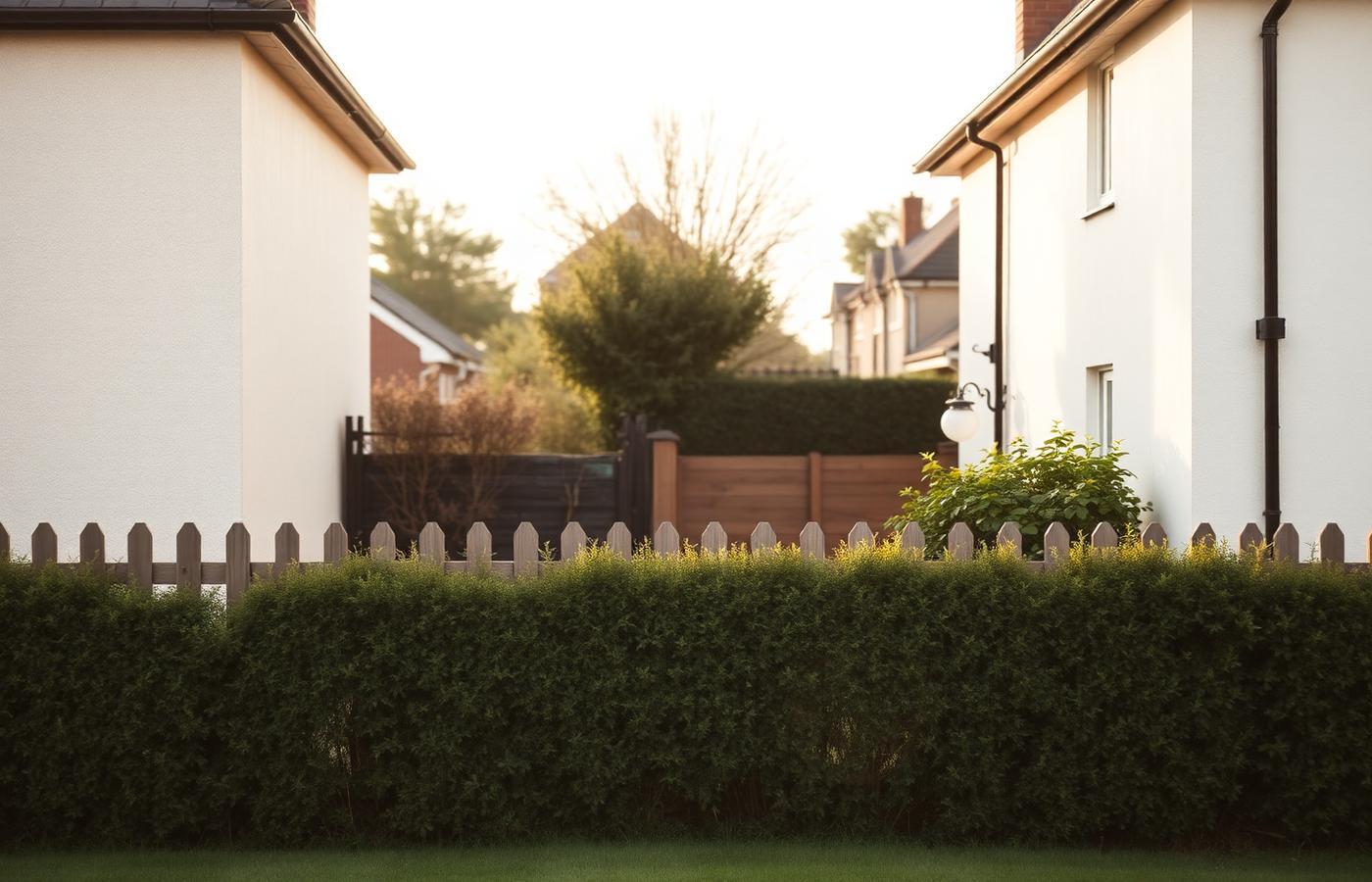
A recent boundary dispute reported by The Telegraph provides a striking illustration of how quickly neighbour litigation can become disproportionate — financially, emotionally and practically.
When a boundary dispute costs more than the land
According to the newspaper, a dispute concerning approximately half an acre of woodland in Sussex developed into five years of litigation. The successful landowners reportedly incurred around £300,000 in legal costs defending their ownership of land which formed part of woodland they had purchased for £125,000. They estimate that their neighbours may have spent approximately £400,000 themselves.
If those estimates are correct, around £700,000 may have been spent arguing over a relatively small parcel of land.
The case was ultimately resolved in favour of the woodland owners, with an appeal against the earlier decision dismissed. But focusing simply on who won risks missing a much more important point.
“Litigation can sometimes produce a legal winner while leaving everyone involved substantially worse off.”
The extraordinary economics of neighbour disputes
There is something particularly troubling about boundary litigation.
The land in dispute may be worth tens of thousands of pounds, yet the legal costs of determining where the boundary lies can rapidly exceed the value of the land itself.
Solicitors may need to consider historic conveyances and Land Registry documents. Surveyors and other experts may become involved. Witness statements are prepared. There may be interim applications, disclosure, conferences with counsel, trial preparation and eventually a trial.
If the dispute continues to an appeal, the costs increase further. The arithmetic can become detached from the original problem.
In the Sussex dispute reported by The Telegraph, the neighbours had apparently previously been offered the opportunity to purchase the adjoining woodland for £77,000. Several years later, the combined costs attributed to the litigation were said to be approaching ten times that figure.
That is an extreme example, but the underlying problem is familiar to anyone involved in civil litigation. Our property and land disputes mediators see the same pattern regularly.
Costs are only part of the damage
The financial consequences are obvious. The less visible cost is what prolonged litigation does to the people involved.
Neighbour disputes are especially difficult because the parties cannot easily escape one another. Unlike a commercial dispute between two companies, the subject matter is quite literally outside the kitchen window.
Every encounter can acquire significance. A fence, hedge, gate, parking space, tree or access road which was once unremarkable can become a daily reminder of the litigation.
In the case reported by The Telegraph, the successful couple described the litigation as causing considerable stress and said that they ultimately took their three children travelling abroad for a year, in part to escape the atmosphere surrounding the dispute. One of them described waking during the night worrying about having spent hundreds of thousands of pounds defending ownership of the land.
That is a consequence which rarely appears in a schedule of costs. Litigation can affect sleep, work, relationships and family life. It can also make future relations between neighbours almost impossible.
“But I am right”
One of the greatest barriers to settlement is entirely understandable: “Why should I compromise when I am right?”
Sometimes a party is right. The difficulty is that being right does not necessarily make litigation economically rational.
Suppose somebody believes that a strip of land worth £50,000 unquestionably belongs to them. They might reasonably regard accepting £25,000 or altering the boundary as surrendering something which is legally theirs.
But the relevant comparison is not simply £50,000 of land versus £25,000. It may instead be a negotiated compromise today versus £150,000 of costs, two years of litigation, an uncertain trial and a possible appeal.
Even a party who wins may recover only part of the actual legal expenditure incurred. That is why commercial decision-making and legal merits have to be considered separately.
Mediation does not require anyone to admit they are wrong
There remains a misconception that suggesting mediation indicates weakness. It does not.
Mediation allows each party to maintain their legal position while exploring whether there is a better practical outcome than continuing the litigation. A mediator does not decide who owns the land, nor does the mediator force either party to compromise. The parties remain in control.
The mediator can, however, help them examine matters which a judge may never be able to resolve. For example:
- Could the disputed land be sold or transferred for an agreed sum?
- Could a boundary be adjusted by a relatively small distance?
- Could one party retain the land but grant access rights to the other?
- Could fencing be replaced or repositioned?
- Could responsibility for trees, hedges or maintenance be agreed?
- Could costs incurred to date be incorporated into an overall settlement?
- Could the parties agree rules about future communication and access?
A court generally determines legal rights. A mediation can address the whole problem.
The ability to settle creatively
This is one of mediation’s greatest advantages in property disputes. A judge usually has a relatively limited menu of remedies available. The parties themselves have many more.
A settlement might involve money. But it could equally involve an easement, transfer of a small area of land, replacement fencing, landscaping, access arrangements or mutual undertakings.
It can also contain something extremely valuable which a court judgment cannot manufacture: a workable relationship between people who are going to continue living next door to one another.
Mediation also provides certainty
Every experienced litigator knows that apparently strong cases can be lost. Witnesses may perform differently from expectations. Historic plans can prove ambiguous. Expert evidence may conflict. The judge may interpret the evidence differently from either legal team.
There is then the possibility of an appeal. Mediation allows parties to exchange litigation risk for certainty.
The settlement may not give either party everything they wanted when the dispute began. But it ends the exposure to further legal fees and brings the dispute to an end. That certainty has considerable value.
The courts increasingly expect parties to consider ADR
Mediation is no longer something sitting on the margins of civil litigation. The courts increasingly regard alternative dispute resolution as part of the ordinary process of resolving disputes, rather than simply an optional extra to be considered immediately before trial.
Parties who unreasonably refuse ADR may also find that their conduct becomes relevant when the court considers costs.
For solicitors advising parties in neighbour and property disputes, therefore, the question should not simply be whether mediation is possible. It should be: when is the earliest sensible opportunity to mediate?
There is an important distinction. A mediation after £150,000 has already been spent may still be worthwhile. A mediation before that £150,000 has been spent is considerably better. Our fees are published so that parties can weigh that comparison at the outset.
Mediate before positions become entrenched
Disputes acquire momentum. A disagreement begins with a conversation. Solicitors become involved. Allegations are made in correspondence. Experts are instructed. Proceedings are issued.
By then parties may feel they have invested so much money and emotion in proving their case that compromise becomes increasingly difficult.
That is precisely why early mediation can be particularly effective. The objective is not necessarily to determine who is legally correct. It is to prevent a manageable disagreement becoming an unmanageable piece of litigation.
The Sussex case has ultimately produced a legal answer to the boundary question. But if the figures reported are correct, it has taken approximately five years and legal expenditure estimated at around £700,000 to obtain it.
Whatever the merits of the individual parties’ positions, those figures provide a powerful reminder of the risks of allowing litigation to develop without repeatedly asking whether there is another way of resolving the dispute.
“Sometimes the most successful outcome to litigation is not winning the trial. It is avoiding the trial altogether.”
This article was prompted by Helen Brown’s report, “A £700,000 boundary battle with our neighbour was so traumatic we left Britain for a year”, published in The Telegraph on 7 August 2026. The factual account of the Sussex dispute referred to above is derived from that report. The analysis and commentary concerning litigation and mediation are ProMediate’s own.
Newsletter
Stay informed
Receive practical guidance, mediation news, dispute resolution insights and updates from ProMediate.
- Commercial mediation
- Workplace mediation
- ADR developments
- Practical dispute resolution guidance
By subscribing you agree to receive ProMediate's email newsletter and updates. Usually monthly. You can unsubscribe at any time. See our Privacy Policy.
Suggested reading
Related areas of expertise
Mediators for this work



How we can help
Newsletter
Stay informed
Receive practical guidance, mediation news, dispute resolution insights and updates from ProMediate.
- Commercial mediation
- Workplace mediation
- ADR developments
- Practical dispute resolution guidance
By subscribing you agree to receive ProMediate's email newsletter and updates. Usually monthly. You can unsubscribe at any time. See our Privacy Policy.
Could mediation resolve your dispute before the costs escalate?
ProMediate provides mediation for property, boundary, neighbour, commercial and other civil disputes. Mediation can take place at an early stage, after proceedings have begun, or even shortly before trial.